Monday, December 12, 2011

The Geologic Time Scale

The Neogene Period

Fossil of Fish


Summary of Neogene Period: The Neogene period was the age of mammals. It is in tertiary period of Cenozoic era.This period is consisted of 2 Epoch: Pliocene (5-1.8 mya);
Miocene (24-5 mya). Miocene is about mammals, bears, horses, monkeys and birds.

The Paleogene Period-extra credit

Anadara Vanderhoofi


Summary of Paleogene period: Paleogene was period of made up life in the Earth.  The Paleogene consist of 3 epochs: Oligocene, Eocene and Paleocene.  New living thing appeared on this period such as first large mammals, deer, pigs, cats, rhinos, tapirs and new form of whales.

Reflection


What did you enjoy most about this project?
I enjoyed the most about this project when I was working with partner and the events that happened in the past were interesting. My partner promotes me to finish it on time. Also the project has different things like video by Animoto and glog by Glogster. We able to divide the work and did it in collaboration.


What was most challenging about this project? Why?
Most challenging about this project was in the periods and references. Because the periods are related to each other and ages of those periods are old. It was complex to find right information.  In addition I never did bibliography before. The web site that I took information and put link and typed the name was extra work and I got confused.

What you change about this project and why?
I would like to leave as I have now and don’t change anything about this project. Because before do this project I discussed with partner the ideas we have. Furthermore my partner was creative that she helped me to figure out the glog by giving new look. I think we did awesome also we are done with extra work.

What are 3 things that you learned from this project?
Something that I learnt from this project is the history of planet Earth. From this history I learnt about Neogene and Paleocene periods. The Neogene was the age of mammals, the Paleogene was the period of made up life in the Earth. In the Paleogene period the continents began to forming and new animals appeared on the Earth. In the Neogene period cause of hot climate that made dry forests and deserts in Australia continent. This project is helpful to understand better about Geologic Time Scale.

Friday, November 11, 2011

The stars

Star is a ball of gas and dust that comes from stellar nebula. They are too small in space because they are too far from Earth. Our Sun is star that close to Earth and makes life on Earth planet. The advantage of stars is making energy by nuclear fusion.
Stars in space are about 20,000,000,000,000,000 and more. Stars visibility 
in space depends where they are located. Some of them close to our solar system and we can see from Earth in dark time of day or use the telescope. Some of them is too big, powerful even our Sun and they are located far from Earth we are not able to see. 
Supergiant stars
Red Giant
White Dwarf stars


Main sequence stars
Stars have four different types: Supergiant, Giant, Main sequence and White Dwarf. Supergiant stars are stars that have high level of magnitude and have massive size. Giant stars are stars that have luminosity bigger than main sequence stars and have medium size. Main sequence stars are all the remaining stars. White dwarf stars are stars that have low level of luminosity and have small size.
Stars have different colors and temperatures. Hot stars have blue color. Cooler stars have red color. The Sun is main sequence star has 5500K and color is yellow. Try to make easy life scientists created H-R Diagram. 

H-R Diagram

H-R Diagram is a graph that use to classify stars by their luminosity, spectral class, color and temperature.
Temperature is climate in stars. Temperature shows how stars are hotter or cooler. Brightness of stars shows how stars are bright or dim that called luminosity or magnitude. Main sequence, Giant and Supergiant stars have high level of brightness. Main sequence and white dwarf have low level of magnitude.
H-R Diagram is very useful diagram to classify stars. H-R diagram is best present colors of stars and spectral class. Each color has on spectral class. Blue has O, blue white – B, white – A, white yellow – F, yellow – G, orange – K, red – M. 


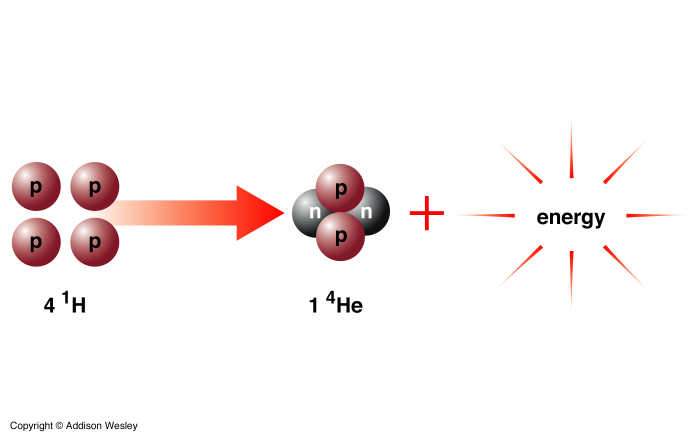
The stars heat made by nuclear fusion and happen in center of stars. Nuclear fusion is a process happens by nuclear reaction.Two molecules of hydrogen gas (H) change into molecules of helium (He). The result is making heat and energy.
Stars come from clouds of gas and dust called stellar nebula. By effect of gravity stars get smaller. As get smaller become hotter when in middle climate is enough hot will be nuclear reaction and star is born.


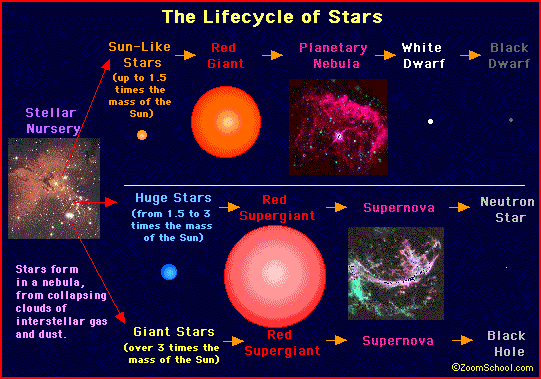
Stars life is similar human life but they live longer than people. They born develop from small size to big then they going to die. Stars come from stellar nebula. From stellar nebula become baby star called protostar. Stars divided by three categories: Sun like star, huge star, giant star.

Life cycle of sun like stars is developing by turning into Red Giant, Planetary Nebula, White Dwarf and Black Dwarf. Life cycle of Huge and Giant stars are almost similar. They turning  by Red Super Giant, Supernova. Some differences between these two types are after turning into Supernova Huge stars have Neutron star, Giant stars have Black Hole.